How to Test an MTU Pressure Sensor on the Bench
November 20, 2026
How to Verify Genuine MTU Sensor Spares
November 20, 2026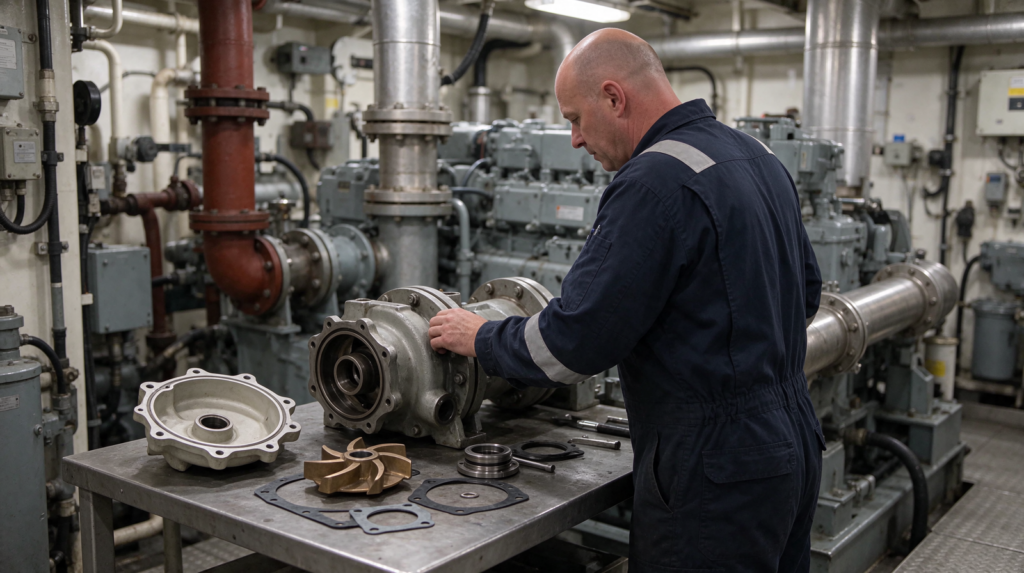
Effective marine engine impeller spare parts planning starts with the cooling systems that cannot be allowed to remain unavailable. Identify every seawater or raw-water pump supporting a critical engine, establish stock based on failure consequence and replenishment time, store elastomeric parts correctly, and record the exact pump and engine fitment. The objective is not simply to keep one spare in a locker; it is to ensure that a verified replacement is available, serviceable and traceable when cooling-water flow is lost.
1. Identify the pumps and engines that require cover
Begin with the vessel’s machinery criticality assessment and the OEM maintenance documentation. List the main engines, auxiliary engines, emergency generators, fire pumps, refrigeration systems and remote diesel-generator sets that use a raw-water impeller. A pump may be small, but its failure can still stop a propulsion engine, remove redundancy or compromise an essential service.
Build a pump-to-engine register
| Record | Why it matters |
|---|---|
| Engine or equipment identification | Shows which machinery is affected if the pump is unavailable. |
| Pump manufacturer and model | Confirms the correct pump assembly and service documentation. |
| Impeller part number | Provides the primary identification for ordering and verification. |
| Number of installed pumps | Determines how many failure points and spare positions exist. |
| Commonality between units | Shows whether one verified spare can support more than one identical installation. |
| Failure consequence | Separates propulsion, emergency and non-critical requirements. |
| Normal replenishment route and lead time | Defines how much stock must be carried before the next reliable supply point. |
Do not assume that two impellers are interchangeable because the pumps look similar. Confirm the OEM part number, pump model, shaft arrangement, impeller dimensions, key or drive interface and any model-specific revision in the equipment parts list. If the part number has been superseded, verify the supersession through OEM documentation or an authorised technical source before updating the register.
2. Set a realistic onboard minimum stock
Stock quantity should reflect both expected consumption and the consequence of an unplanned failure. The minimum for a critical single-engine installation will normally be more conservative than the minimum for a non-essential pump with a fully redundant standby.
Use a risk-based calculation
A useful planning structure is:
Minimum stock = planned consumption during the replenishment window + emergency reserve − verified usable spares already available
Planned consumption should be based on the OEM maintenance schedule, operating history and the number of installed pumps. Do not create a universal replacement interval from another vessel or engine model. Impeller life depends on operating hours, water quality, debris, suction conditions, dry-running events and pump condition; the manufacturer’s maintenance schedule and actual records are the controlling references.
The replenishment window should include purchasing time, supplier lead time, transport, customs or port restrictions where applicable, and the time until the next location where the correct part can be reliably received. For a vessel trading between remote ports, use the longest credible supply exposure rather than an optimistic quoted transit time.
| Situation | Planning approach |
|---|---|
| Single propulsion engine with no practical substitute | Carry enough verified stock to cover the expected supply exposure and at least one credible emergency change, subject to the operator’s risk assessment. |
| Multiple identical engines with common verified fitment | Assess fleet-level demand, simultaneous-failure risk and whether one spare can be released to any unit without creating a new critical shortage. |
| Standby generator with alternative emergency capacity | Base stock on start reliability, statutory or class requirements where applicable, and the time needed to restore the standby unit. |
| Remote power site with infrequent logistics | Include seasonal access, difficult transport, local storage conditions and the possibility that no suitable replacement is available locally. |
Set two control levels in the inventory system: a minimum quantity that triggers replenishment and a reorder quantity that restores the planned stock position. A spare consumed during an emergency should trigger an immediate review, not wait for the next routine stocktake.
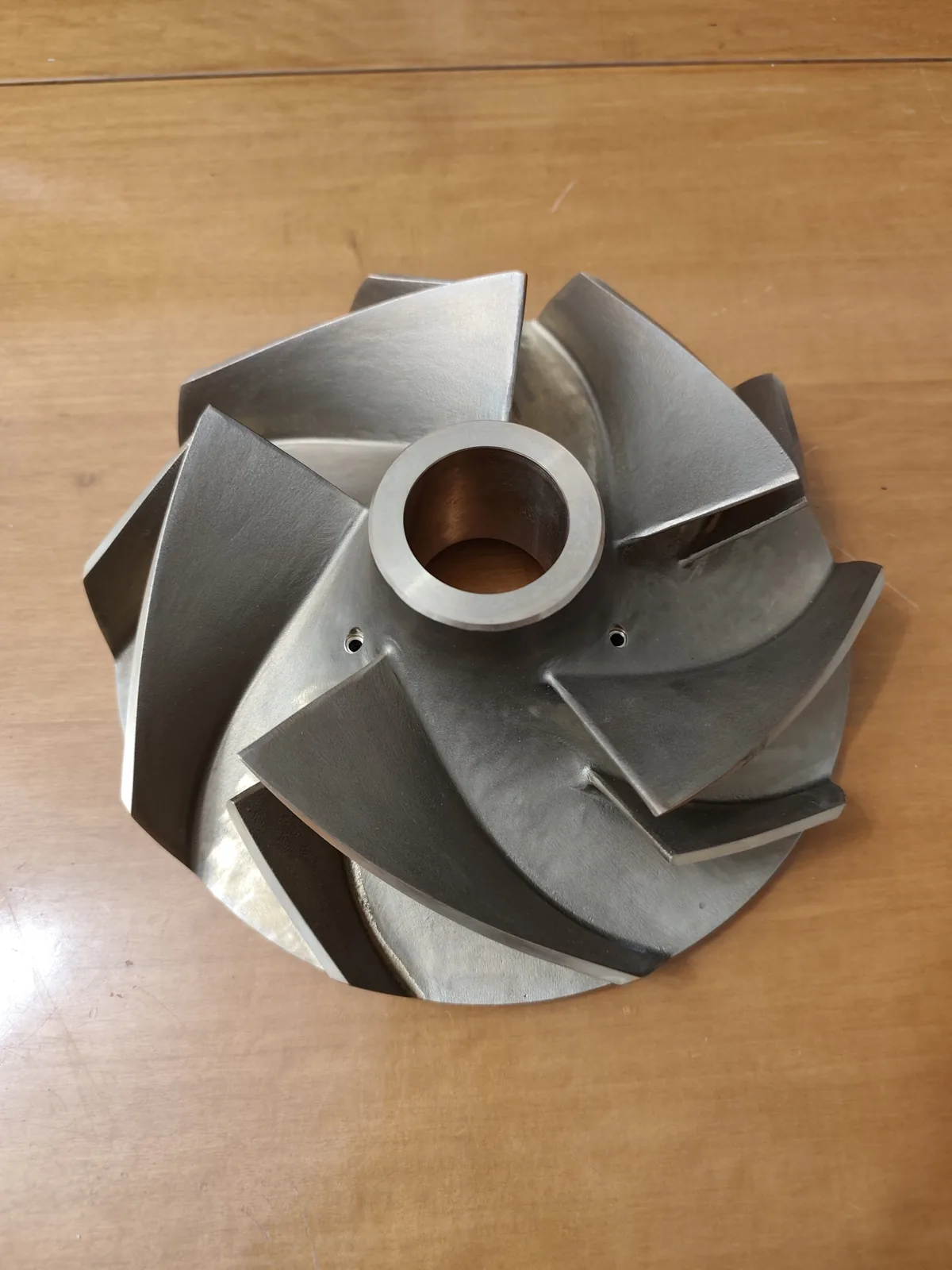
For a verified MTU installation, the MTU 5842040406 Sea Water Pump Impeller – MTU ValueCare, Original Packaging is listed as an unused cast-bronze impeller for MTU sea-water pumps. It is supplied in original MTU ValueCare packaging, but the part number must still be checked against the engine and pump parts list before it is allocated as an onboard spare. The available stock is limited, so quantity planning should not treat availability as guaranteed until the purchase is confirmed.
3. Protect impellers during storage
An impeller can be unused and still be unsuitable if it has been damaged by poor storage. Keep replacement parts in their original protective packaging where supplied. Store them in a clean, dry, temperature-stable location away from direct sunlight, ozone-generating electrical equipment, solvents, oils, fuels and sharp edges.
Storage checklist
- Keep the impeller in its protective bag or original box until issue to the maintenance team.
- Record the receipt date, part number, quantity and storage location.
- Inspect packaging periodically for water ingress, crushing, contamination or missing identification.
- Do not hang, clamp or stack parts in a way that permanently deforms the blades.
- Apply the OEM storage-life requirements where they are specified; do not invent a shelf life from general warehouse practice.
- Use stock rotation and inspect older items before installation, especially after prolonged storage or exposure to unsuitable conditions.
Before fitting, compare the new part with the approved record and inspect the hub, blades and drive interface for cracks, distortion, corrosion or contamination. If the packaging or part identity is doubtful, quarantine it until the technical superintendent or responsible engineer has verified it.
4. Plan around port and lead-time risk
Procurement planning must consider where the vessel or remote site will be when the spare is required, not only where it is today. Link the impeller register to the vessel schedule, planned maintenance system and purchasing forecast. For critical engines, identify at least one acceptable supply route and define the last practical ordering point before a remote operating period.
Lead-time review questions
- Is the required part number currently available, or is it only an old stock listing?
- Can the supplier confirm the actual quantity and packaging condition?
- Will the delivery location, customs process and port stay allow receipt and inspection?
- Is the part required before a planned overhaul, dry-docking period or remote deployment?
- Has the purchasing request specified the exact part number rather than only the engine family?
- Would consuming the last onboard spare leave another identical engine uncovered?
Where a part is difficult to obtain, raise the order before the stock reaches zero. A planned replacement is normally easier to manage than an urgent shipment after a cooling-water alarm or pump failure. However, never substitute a visually similar impeller without confirming the complete fitment and the OEM’s approval.
5. Record part numbers and pump fitment properly
The inventory description should contain enough information for a person ashore or on another watch to identify the correct item without opening the pump. At minimum, record the OEM part number exactly as printed, including spacing if the system supports it, the equipment and pump model, application, quantity per pump, storage location and fitment status.
| Field | Example of the required record type |
|---|---|
| OEM part number | Exact number from the approved parts list and package label. |
| Application | Sea-water or raw-water pump; identify the associated engine or service. |
| Fitment evidence | Engine manual, pump parts list, technical drawing or approved supersession record. |
| Physical stock | Quantity, condition, package status and location. |
| Issue history | Date issued, equipment, running hours if recorded, and reason for replacement. |
| Reorder trigger | Minimum quantity and person or department responsible for replenishment. |
Use the same discipline after installation. Record the removed impeller’s condition, including missing or damaged blades, cracking, hardening, distortion and signs of dry running or debris contact. Also record whether the pump cover, wear surfaces, seal and shaft were inspected. An impeller failure can be a symptom of a pump or suction-side problem; replacing the part without investigating the cause can lead to a repeat failure.
Safe issue and replacement control
- Follow the OEM manual and the vessel or site permit-to-work system.
- Stop and isolate the engine and pump before opening the seawater circuit.
- Allow hot components to cool and depressurise or drain the relevant section before removing the cover.
- Prevent accidental starting and apply lock-out/tag-out where required.
- Control seawater discharge and protect electrical equipment from flooding or spray.
- Use suitable tools and avoid damaging the pump housing, shaft or seal faces.
- After assembly, check for leaks and confirm cooling-water flow under the approved commissioning procedure.
A spare-parts plan is complete only when the part is identifiable, physically protected, technically verified and replenished after use. For the MTU 5842040406 impeller, retain the original packaging and match the printed part number—also shown as 584 204 04 06 in spaced search references—to the engine’s approved parts documentation before installation.
FAQ
How many raw-water impellers should be carried?
There is no universal quantity. Base the minimum on criticality, installed pump count, expected consumption, replenishment exposure, redundancy and the OEM maintenance schedule.
Can a similar-looking impeller be used as a substitute?
Not without verified fitment. Check the OEM part number, pump model, dimensions, drive interface and any approved supersession or interchangeability record.
How should unused impellers be stored?
Keep them clean, dry, protected from sunlight, ozone, chemicals and deformation, preferably in the original protective packaging. Follow any OEM storage-life requirements.
What should be recorded after an impeller failure?
Record the part identity, running hours, failure condition and pump inspection results, then investigate possible dry running, debris, suction restriction or pump damage before returning the equipment to service.